A customer has a question. The answer is sitting in your help center, your Confluence docs, or some combination of the two. It’s accurate, current and carefully maintained. But the customer still can’t find it, so they open a ticket, explain everything from scratch and wait.
The answer was there the whole time. But your customer still lost an afternoon, your support team picked up a ticket that never needed to exist, and everyone walked away a little more frustrated.
Most organizations have spent years building trusted knowledge in Confluence – so why aren’t we putting it to work where it matters most? The problem isn’t the knowledge. It’s that the way people look for help has fundamentally shifted, and static documentation hasn’t kept up.
That's the shift we're building for with the Scroll Documentation Platform: from static documentation to docs that answer back.
See it live in an upcoming webinar
Join us on November 12 at 15:00 CET for an up-close look at some exciting updates coming to the Scroll Documentation platform. Save your seat →
Why Help-Seeking Has Changed
Users today don’t think in terms of documentation, support portals and AI systems. They just have a problem that needs solving. They ask in their own words, expect a useful answer and want the next step to pick up where they left off.
They also increasingly discover documentation through AI tools, not only through a help center or knowledge base, meaning the bar for getting help has moved. The numbers back that up. According to a recent study by Zendesk:
“Consumers now expect service that picks up where they left off: 81% want agents to continue the conversation without backtracking, and 74% are frustrated when they have to repeat information. As these capabilities mature, 67% expect brands to tailor support based on prior interactions.”
The expectations are clear, but many teams are still struggling to deliver because so many documentation journeys end in a dead end. What does that dead end look like?
The Dead-End Doc Experience
Find documentation → Can't solve the problem → Leave the help center → Find the support portal → Explain everything again.
Every time someone hits that dead end, switches channels or repeats themselves, the experience breaks and your support team starts from zero. At best, this creates friction for the user. At worst, it shatters trust.
The good news? The answers usually already exist, and for many teams they're already in Confluence. The challenge is that most documentation is still built to be found, not to help. It waits for someone to search, browse and interpret it, and when it falls short, the user is on their own.
What Living Knowledge Means
Living knowledge closes that gap. It's documentation that actively helps people resolve problems: it answers questions directly, carries context into support when self-service isn't enough, and reaches people in the AI tools they already use, all from the same approved source.
In other words, what you document in Confluence isn’t just a dumping ground of information. If done right, it’s a working asset. Three things make it work:
-
It's trusted. Answers are grounded in approved, current content, and people can see where they came from.
-
It's connected. Self-service and human support reinforce each other instead of operating as separate systems.
-
It's governed. You decide what knowledge is exposed and where, so AI experiences don't run on stale or unapproved guidance.
AI is only as useful as the knowledge it can reliably access. That’s why structure and governance aren’t constraints here. They’re what make AI answers worth trusting.
What's Coming to the Scroll Documentation Platform?
The Scroll Documentation Platform already helps 8,000+ organizations publish Confluence content anywhere, with structure and control. With Scroll Sites, teams turn Confluence content into branded help centers and documentation sites.
Remember the dead end? Here’s the same journey, without it: find → ask → resolve → connect.
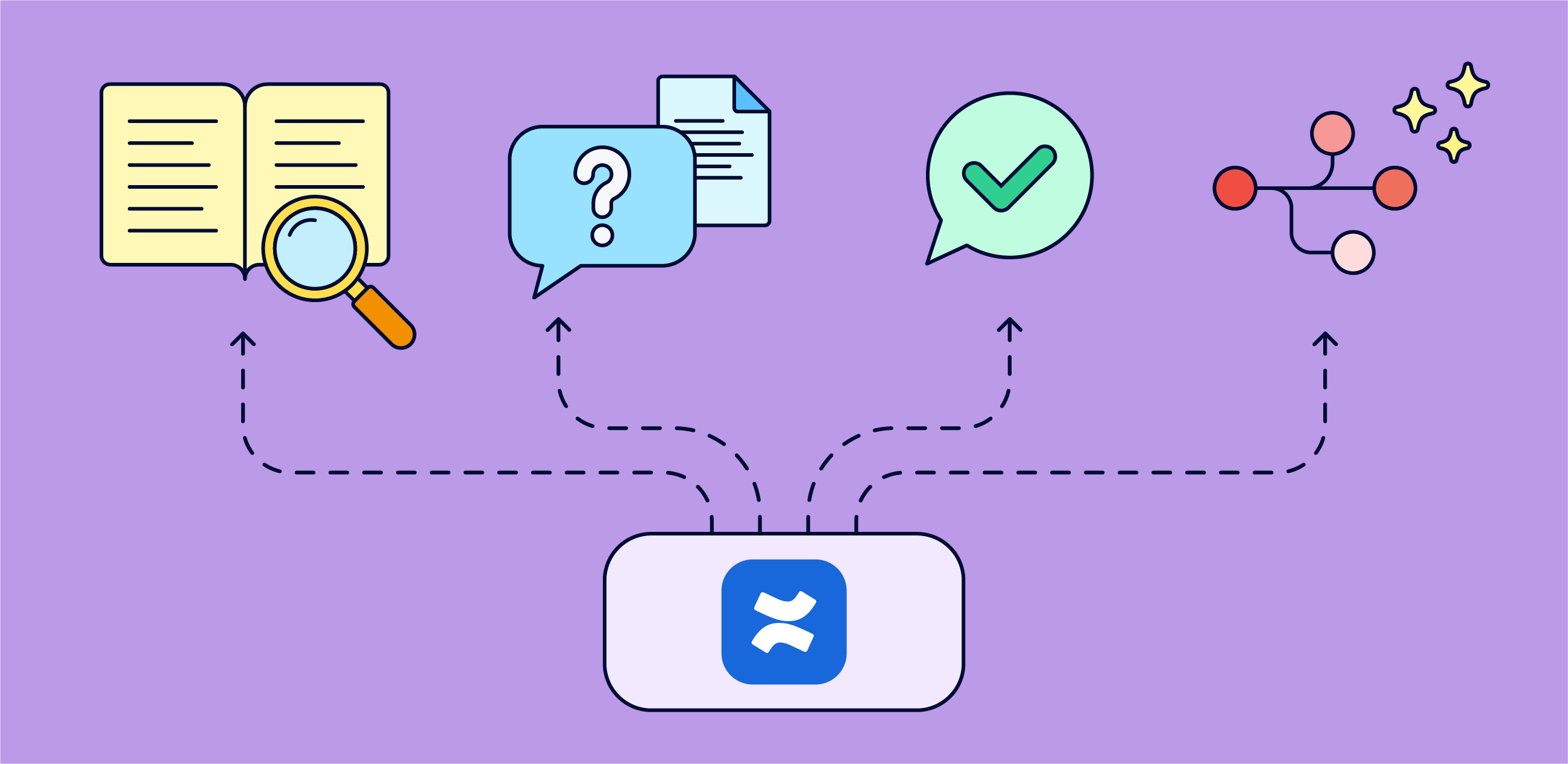
Find: a help center people actually use
With Scroll Sites, teams already publish Confluence content as branded, searchable help centers. That's the foundation everything else builds on.
Ask: answers grounded in your docs
An AI Assistant for Scroll Sites lets people ask questions in plain language, even when they don't know the right terminology. Answers are synthesized from your published Confluence content, with links back to the source pages, so readers can always check where an answer came from.
Resolve: support without starting over
When self-service isn't enough, Scroll Support Hub lets people ask for help right from the help center. They don't need a separate portal or have to re-explain their issue. Requests arrive in Jira Service Management with the context of the user's documentation journey, such as the page, version and search, so agents can start helping right away.
Connect: trusted answers wherever people work
The Scroll MCP Server makes your published, governed documentation available to AI tools and agents through the Model Context Protocol (MCP), an open standard for connecting AI applications to data sources. Your knowledge reaches people in the tools they already use, and it's still the same approved source.
Together, these capabilities turn documentation from a passive destination into living knowledge: an active service layer for your customers, your agents and AI. Scroll Support Hub is available in early access today, and the AI Assistant and MCP Server are actively being built with early-access customers.
How Does This Fit with Confluence and Jira Service Management?
Jira Service Management is great at managing support work. Scroll shapes the customer-facing help experience around it. Confluence stays your source of truth, Jira Service Management stays your support system of record, and your users get one connected journey instead of two disconnected destinations.
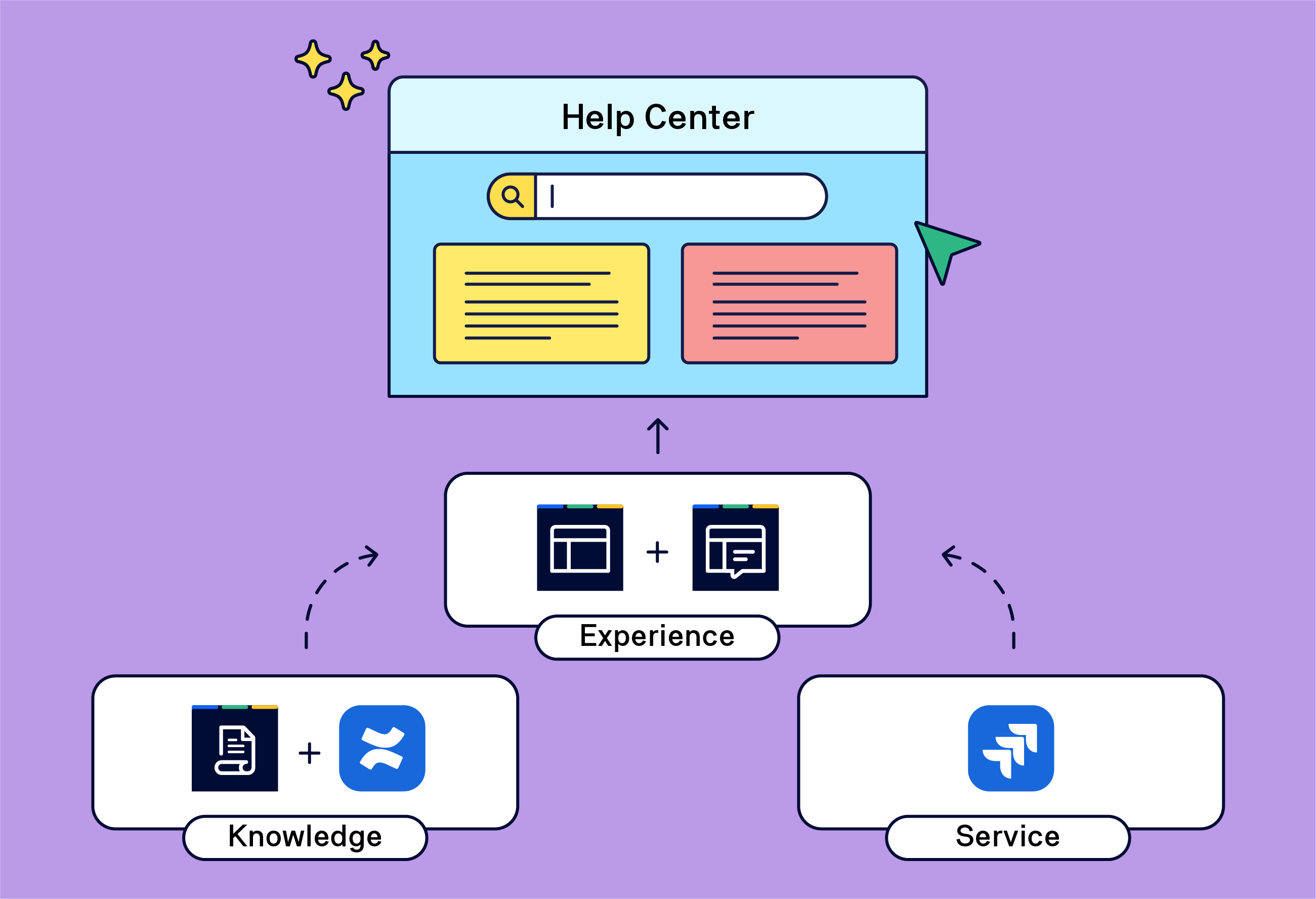
Everything in the Scroll Documentation Platform builds on the Atlassian platform. It doesn’t replace it. Think of it in four layers:
|
Layer |
What it does |
Where it lives |
|---|---|---|
|
Knowledge |
Create and manage trusted, structured content |
Confluence, extended by the Scroll Documentation Platform |
|
Experience |
Turn that content into a branded help center where people find answers, ask questions and request help |
Scroll Sites with the AI Assistant and Scroll Support Hub |
|
Service |
Route, prioritize and resolve support work |
Jira Service Management |
|
AI tools |
Make approved knowledge available to AI tools and agents |
Scroll MCP Server |
Where does Atlassian AI fit? Atlassian AI, including Rovo, helps teams get more from the knowledge inside Atlassian. Scroll takes that knowledge further: to your branded, versioned public help center, and to the customers, partners and AI tools that rely on it. The two work together, and Scroll fills in the external, published side.
What Does This Mean for Your Team?
For documentation teams: Your work becomes the source behind answers, support and AI across the business, and you can finally show its impact. See which pages, searches and questions lead to support requests, so you know exactly where to improve.
For support teams: Requests arrive in Jira Service Management with the page, version and search the customer was looking at. Agents skip the discovery back-and-forth and start solving, and more questions get resolved before they ever become tickets.
For IT and security teams: Scroll respects Confluence permissions and exposes only published, approved content, whether it's your help center or an AI tool pulling from your docs through MCP.
For Atlassian Solution Partners: This gives you a new service to offer on every Confluence and Jira Service Management deal. You can deliver a complete help center experience, from branded documentation to AI-ready knowledge, built entirely on Atlassian.
Your customers already have the answers they need. They’re in your docs. Now those docs can answer back.
👀 Get a First Look
Join the webinar: “Docs That Answer Back”
On Thursday, November 12, at 15:00 CET / 9:00 a.m. ET, we'll showcase our vision for the full help center journey, from finding an answer to getting support to reaching AI tools, and show what's running today and where we're headed.
Can't make it live? Register anyway and we'll send you the recording.
Help shape what comes next
We're looking for Scroll Sites customers who want to work closely with our team as these capabilities develop. Participants get first access to new capabilities, a direct line to our product team, and the chance to test with their own documentation and support use cases. Sign up for Early Access →