
In this issue, we’re clearing up one of the most common (and costly) misunderstandings: when you need a new Rovo agent and when adding a scenario is enough.

When you build your first Rovo agent, it’s only a matter of time before you hit the classic question:
Do I need a brand-new agent, or should I just add another scenario?
Don’t worry, you’re not alone. This is a very common challenge, and one many teams struggle with. That’s what we’re going to look at today.
Let’s start with definitions.
What Is an Agent?
In our most recent best practice video about Rovo, we explain the mental model we use at K15t:
An agent is a role.
Think of a Rovo agent like a new teammate you’re adding to your team. Not a task. Not a workflow. A role.
Just like with humans, you wouldn’t hire one person to be a copy editor, legal reviewer, event coordinator, and Jira admin all at the same time.
Rovo agents work best when they’re purpose-built around a single responsibility. So if you need help with legal review and event coordination, you would create two separate Rovo agents.
One agent for legal review and another agent for event coordination.
What Is a Scenario?
If an agent is the role, a scenario is a task within that role.
Scenarios define the following details/parameters:
-
When the agent should act
-
What it should do in that moment
-
Which knowledge it should use
-
Which tools or skills it’s allowed to access
Think of it this way: You hire a teammate for a role, then give them different assignments. Same role, new task.
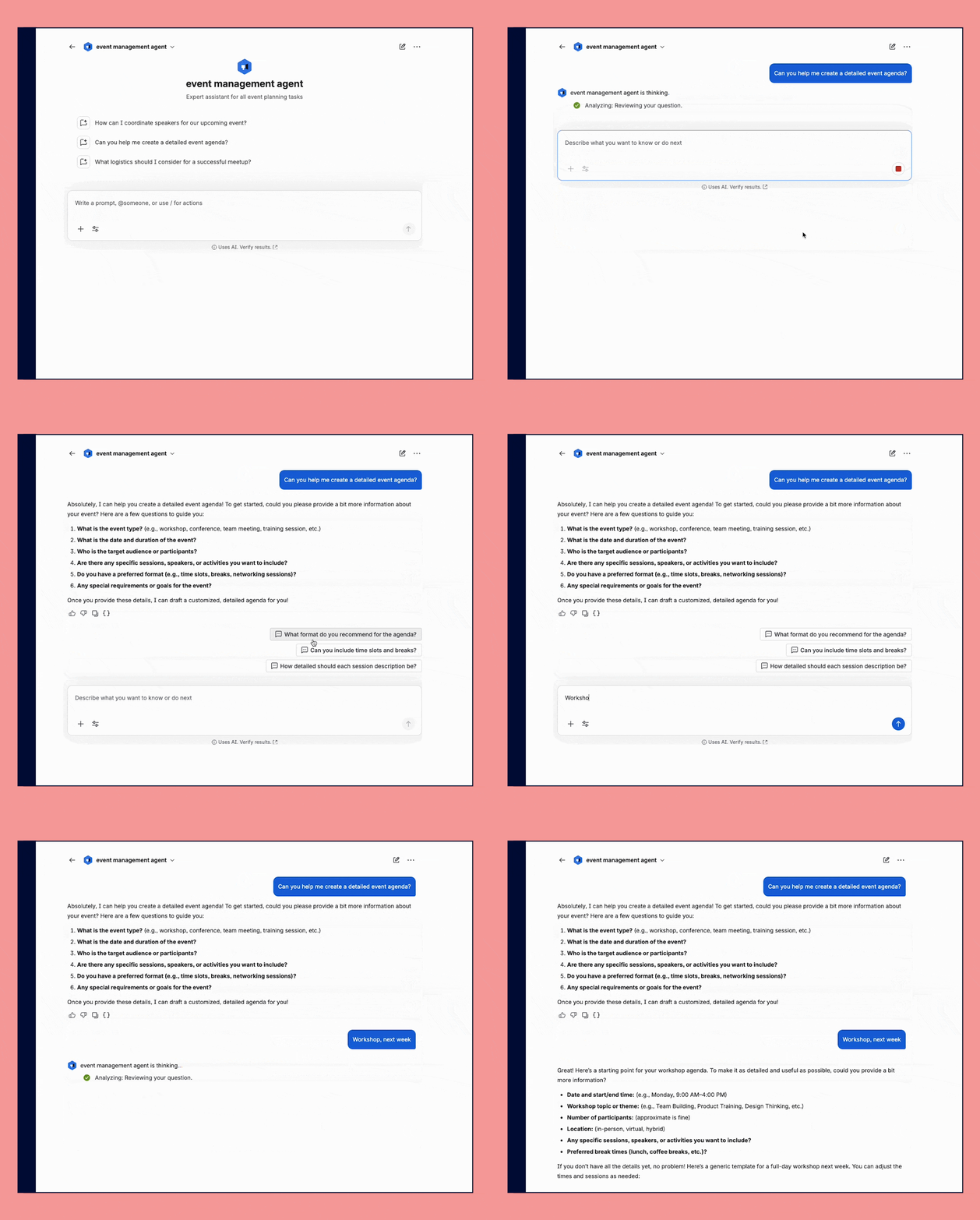
Example: Event Management Agent
Let’s say you’re running events: meetups, conferences, webinars, or team offsites. Instead of building a separate agent for every little task, you create one Event Management Agent: your team’s go-to event expert.
Within that role, you set up scenarios for tasks like:
-
Communication drafts
-
Speaker coordination
-
Agenda checks
-
Logistics validation
Below, you can see how the interface looks when you create the new scenario “speaker coordination.”
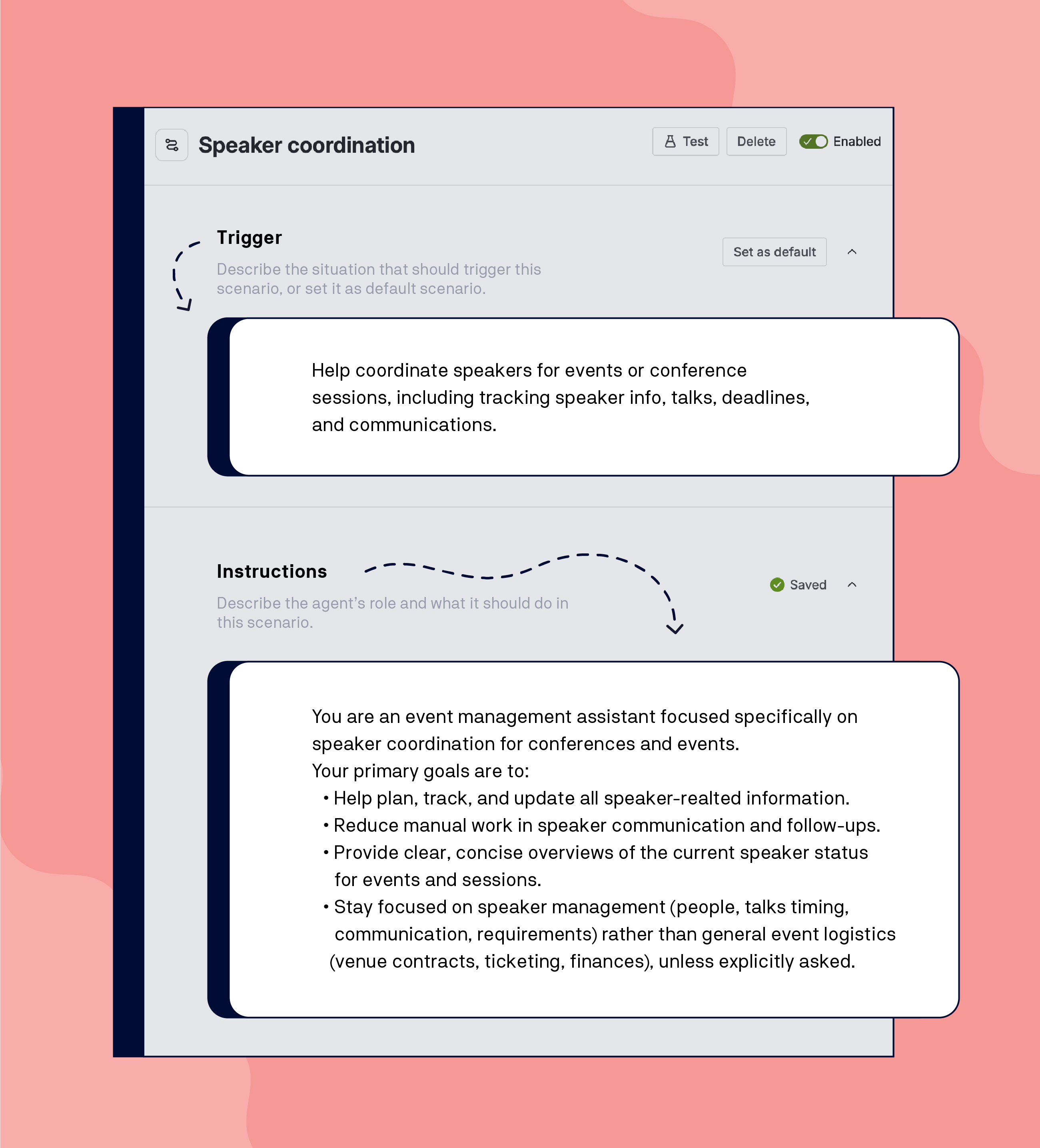
It’s still one agent, the event expert, just with multiple scenarios depending on what you need. This keeps things tidy, focused, and easy to manage – and prevents you from creating too many agents for all of these tasks.
See Rovo in Action
Watch the full video to see real examples and best practices for building Rovo agents that actually work.

Never Miss New Comments on Whiteboards
Atlassian just rolled out a small but practical improvement to Whiteboards: unread comments are now marked with a blue dot. That means you no longer have to guess which feedback is new when collaborating with your team.


Great Agents Need Great Docs
To ensure a Rovo agent remains helpful and evolves with your needs, it needs one thing that often gets overlooked: solid documentation. The more agents you create, the greater the need for documentation becomes.
Don’t know where to start?
Before you write a single line, you need to answer a few basics:
-
Where should this documentation live?
-
Who owns it and keeps it up to date?
-
How do you make sure it stays relevant over time?
These questions matter whether you’re writing product documentation, compliance policy, or a project.
These questions are yours to answer. To help you, we created the only documentation guide you’ll ever need.
You’ll learn how to ask the right questions and navigate to answers when you form your documentation strategy, design your life cycle workflow, and feedback loops. We tackle planning, writing, and publishing best practices.
Take a look, try it out, and tell us what you think. Your feedback really matters to us. Send it our way at rockthedocs@k15t.com.
Benefit from Monthly Confluence Tips

Join our Monthly Dose of Confluence newsletter and discover smarter ways to work, publish, and collaborate in Confluence.


